A Smarter Approach to Metal Removal in Surgery
Rapid localisation. Minimal Tissue Damage. No Radiation

GetMet has a wide range of clinical applications across orthopaedics, trauma surgery, emergency and military medicine. It helps surgeons locate metallic objects in soft tissue and bone quickly and accurately, without using ionising radiation. The device can be covered with a sterile protective bag for use in the sterile environment

Military & Humanitarian Medicine

In military and humanitarian settings, GetMet can help medical teams locate bullets, shrapnel and other metallic fragments in patients injured in conflict zones and other emergency environments. Its handheld design makes it suitable for use in field hospitals and resource-limited settings
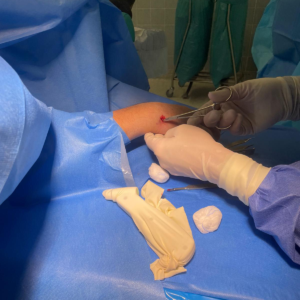
Orthopaedic Surgery, Foot & Hand

GetMet is particularly useful for locating metallic implants used in fracture treatment, including screws, plates, blades, Kirschner wires (K-wires), pins and cerclage wires. It supports both the removal of fixation materials during planned procedures and the localisation of implants or fragments during trauma and reconstructive surgery
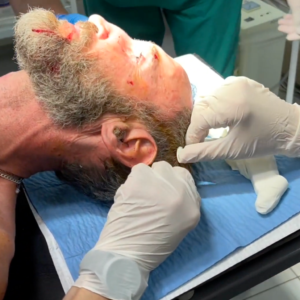
Trauma & Emergency Surgery

In emergency situations, GetMet can help locate metallic foreign bodies such as bullets, shrapnel, needles, nails, fish hooks and metal fragments. This can support surgical exploration and removal while helping to reduce unnecessary tissue disruption

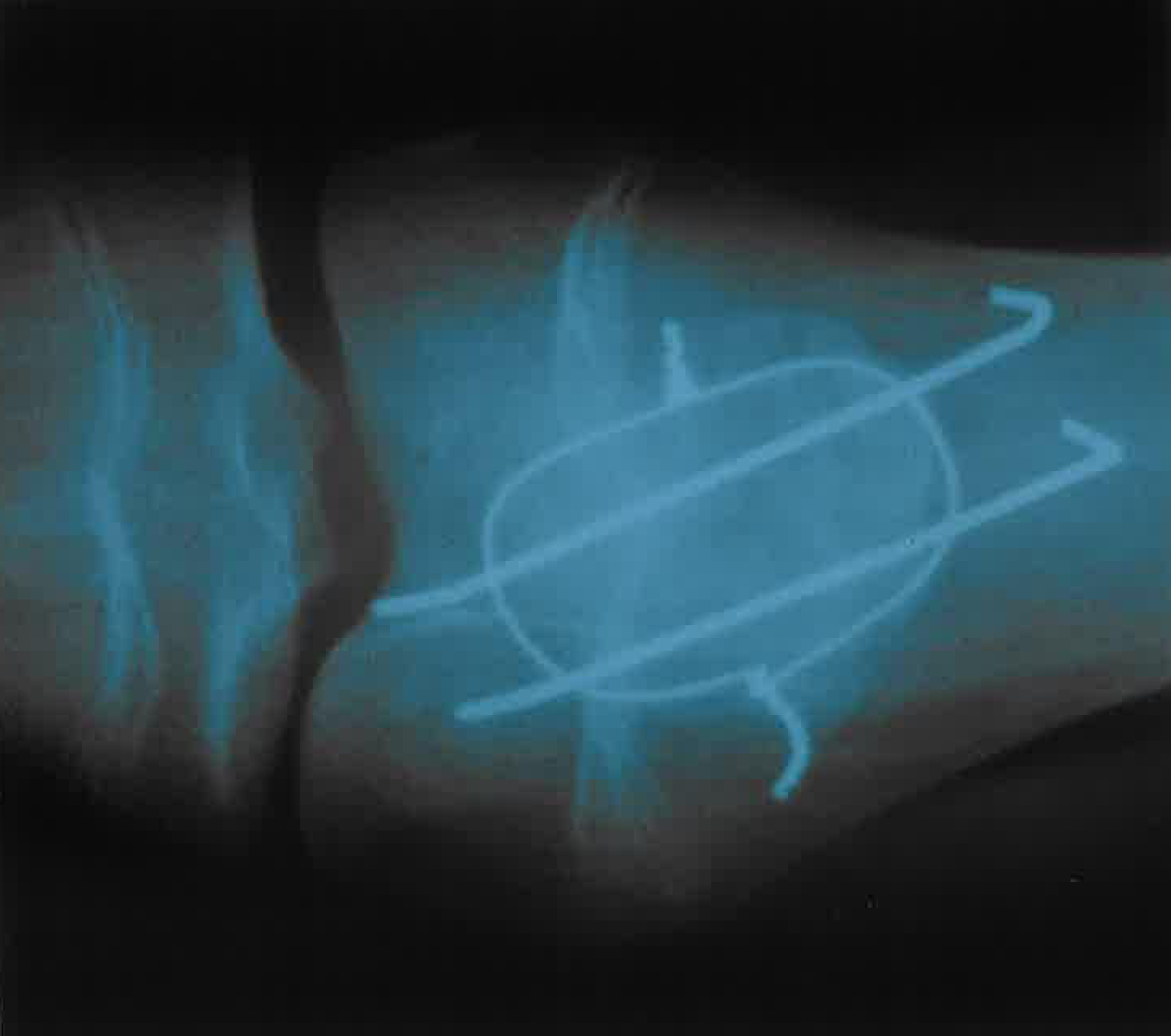
Patella Fracture

X-Rays of a Patella Fracture That Has Been Fixed With Two Kirschner Pins and Cerclage Wire

GetMet makes it easy to locate X-rays of a patella fracture that has been fixed with two Kirschner pins and Cerclage wire. With the advanced technology of GetMet, the precise location of metallic objects can be easily detected, ensuring that the recovery process is as effective and efficient as possible. (See Images)

Examples of types of fractures:

  • Fracture of the patella. For removal of K-pins and Cerclage wires.
  • Fracture of olecranon. For removal of K-pins and Cerclage wires.
  • Fractures of metacarpals. Removal of K-pins.
  • Fractures of metatarsal bones. Removal of K-pins.
  • Fractures of digits of foot and hand. Removal of K-pins.
  • For removal of temporary metallic implant fixation.

Simple & Rapid Metal Localisation with No Radiation

Dr. Numan Shah

Consultant Trauma & Orthopaedic surgeon (Hip & Knee Arthroplasty) Orthopaedic Lead for 3D Surgical Planning and Innovation Centre. Manchester, UK

“GetMet has been highly effective in reducing the time needed to locate and remove implanted metalwork in theatre. It lowers reliance on X-ray imaging, improving resource efficiency and reducing costs for the Trust. We are further assessing patient benefits, including reduced surgical trauma, greater procedural precision, and lower X-ray exposure for both patients and surgical teams”

Dr. C-M Löfhjelm

Gynaecologist. The Hospital of Central Finland, Jyväskylä

“A serious vaginal rupture during delivery – the midwife broke the suture needle. I was called to look for the needle – I was given an exact description of the site of the needle. After half an hour of searching in vain, I remembered my colleagues´ GetMet device. I put it into a sterile operating glove and started to search again. After two minutes the detector found the needle fragment elsewhere. I made a small incision and retrieved the broken needle (about 5 mm in length)”

Dr. Michael Koch

Department of Hand and Plastic Surgery Department. Senior Consultant at Klinikum Bayreuth GmbH, Medizincampus Erlangen/Bayreuth, Germany

“Be it in the emergency room, in the emergency services or in the operating room! With the GetMet you can find any metal foreign body quickly, specifically and precisely so that you can remove it. This procedure is time saving and protects your staff from unnecessary x-ray exposure”

Dr. Camilla Vesakas

Assistant surgeon. The Hospital of Central Finland, Jyväskylä, Finland

“A pin from a wire brush accidentally got lodged under the skin of the chest. The pin caused distress to the patient. It was not palpable. The radiologist marked the site using a transilluminator. I could not find the pin, so I thought of using the GetMet apparatus we have on trial. I put it in a sterile glove and very soon found the pin”

Dr. Jorma Huuhtanen

Former Minister of Social Affairs and Health, Member of the Finnish Parliament and Clinician

“A new device for identifying metal implants and objects from the human body has been developed in Jyväskylä, Finland. The apparatus (GetMet) is especially designed to assist in removing implants and metal fragments from soft tissue and bone. It is highly appropriate for first aid purposes and especially for removing metal used in osteosynthesis of fractures.

The product is an excellent innovation in the field of surgery. Using this device it is possible to reduce operating times, place surgical incisions correctly and speed up recovery. This product reduces the need for X-ray imaging and the use of a transilluminator.

I believe that the product is of value in both first aid surgery and elective surgery when searching for metal implants or other metal objects. One obvious field of application is military and field hospitals. The product seems to have the potential for international success.”